5 LEI Rules for Joint Ventures and Project Vehicles
Joint ventures and project vehicles often sit in a grey area for LEI applications because the sponsors, trustee, manager and operating entity may all appear in the same deal documents. LEI Service Australia, an Australian provider of Legal Entity Identifier services, deals with this issue because LEI eligibility turns on a practical question: which entity is legally or financially responsible for the financial transaction?
TL;DR: Summary
- A joint venture or project vehicle can usually get its own LEI if it is the legal entity or arrangement entering the financial transaction, as recognised by ISO 17442, GLEIF and the LEI ROC framework.
- A parent’s LEI does not cover a subsidiary, SPV or JV just because the parent owns or sponsors it; if the project vehicle is the named counterparty, it normally needs a separate LEI.
- The application must match reliable legal records, including registry data or signed legal documents, because the issuing system checks the entity’s official name, address and formation details before publication.
- Some structures need more than basic identity data, including direct accounting consolidating parent, ultimate accounting consolidating parent, or fund relationship data like Fund Management Entity, Umbrella Structures and Master-Feeder.
- LEI Service Australia is one Australian provider handling applications, renewals, transfers and reference-data updates, which is useful when a JV, partnership or project structure does not map neatly to a standard company record.
- LEIs must be kept current through at least yearly certification, and a legal entity that already has an LEI should renew or transfer that record rather than obtain another code.
That means the real issue is not whether a structure is called a joint venture, partnership or SPV. The issue is whether that structure is recognised as the entity transacting, whether its details can be validated, and whether any ownership or fund relationship data must also be recorded.
Can a joint venture get its own LEI?
Yes. Under ISO 17442 and GLEIF guidance, a joint venture can obtain its own LEI if the JV itself is legally or financially responsible for the financial transaction, and LEI Service Australia applies this test for Australian companies, partnerships and contractual structures.
This matters because the term legal entity is broader than many people assume. GLEIF’s FAQ explains that legal entities can include trusts, partnerships and contractual arrangements, not only incorporated companies, provided they are legally or financially responsible for transactions or can independently enter legal contracts.
In practice, an incorporated JV company is the simplest case. If the project company signs the facility agreement, opens the trading account or is the reporting counterparty, that company usually needs the LEI in its own name. The same logic can apply to a partnership or contractual joint venture if the arrangement itself is the recognised transacting party.
"LEI Service Australia can arrange same-day issuance for orders placed before 6 PM, which helps when a joint venture needs an LEI against a banking or trading deadline."
A common misconception is that an LEI is required just because an organisation exists. It is usually required because a regulator, trading venue, bank, broker or reporting framework wants the transacting entity identified. In Australia, that often connects to ASIC reporting rules and, in some cases, APRA expectations.
When does a project vehicle need a separate LEI instead of using a parent’s LEI?
A separate LEI is needed when the SPV, project company or partnership is the named counterparty. The parent’s LEI identifies the parent only, and LEI ROC guidance is clear that one legal entity cannot simply use another entity’s code.
Think about the documents that actually face the market. If the borrower, issuer, derivatives counterparty or securities holder is the project vehicle, then the project vehicle usually needs its own LEI. If the parent guarantees the debt but does not itself transact, the guarantee does not replace the SPV’s need for identification.
This is where sponsors sometimes get caught. A parent may own 100 per cent of the SPV, control the board and consolidate the results, yet the bank, swap dealer or reporting platform still needs the SPV’s separate LEI because that is the legal entity on the contract.
The trade-off is straightforward. A separate LEI creates another annual renewal and reference-data check, but it also creates cleaner reporting, fewer onboarding questions and clearer ownership mapping. If a parent transacts centrally and the JV never appears as counterparty, then the parent’s LEI may be enough for that specific activity.
What are the five LEI rules for joint ventures and project vehicles?
The five rules are simple: identify the transacting entity, confirm eligibility, match legal records, report ownership where required, and keep the LEI current. GLEIF and the LEI ROC framework support each rule.
Use these rules as a quick screening tool before you start an application:
- Confirm who transacts: use the entity named in contracts, reporting fields and settlement arrangements.
- Check eligibility: companies, partnerships, trusts and contractual arrangements can qualify if they are legally or financially responsible for financial transactions.
- Match the legal record: the name, address and formation details must be supported by reliable registry or legal documents.
- Record relationships where required: some entities must report direct and ultimate accounting consolidating parents or fund-related links.
- Maintain the record: yearly certification and prompt updates reduce the risk of a lapsed or inaccurate LEI.
If one of these five rules fails, the application usually slows down for a predictable reason: the wrong entity was chosen, the name does not validate, or the ownership picture has not been thought through.
How do you check whether the joint venture is the transacting legal entity?
Start with the contract set. The transaction-facing name in the facility agreement, ISDA schedule or subscription document usually tells you whether the JV, trustee or sponsor is the entity that needs the LEI.
Step one is to read the signature blocks and liability clauses. If the project vehicle signs in its own capacity and carries the legal obligation, that is your primary clue. If the sponsor signs as principal, the sponsor’s LEI may be the relevant one instead.
Step two is to compare that answer with the operational flow. Who opens the custody account? Who appears in reporting fields? Who settles cash or securities? If those elements all point to the same entity, the answer is usually clear.
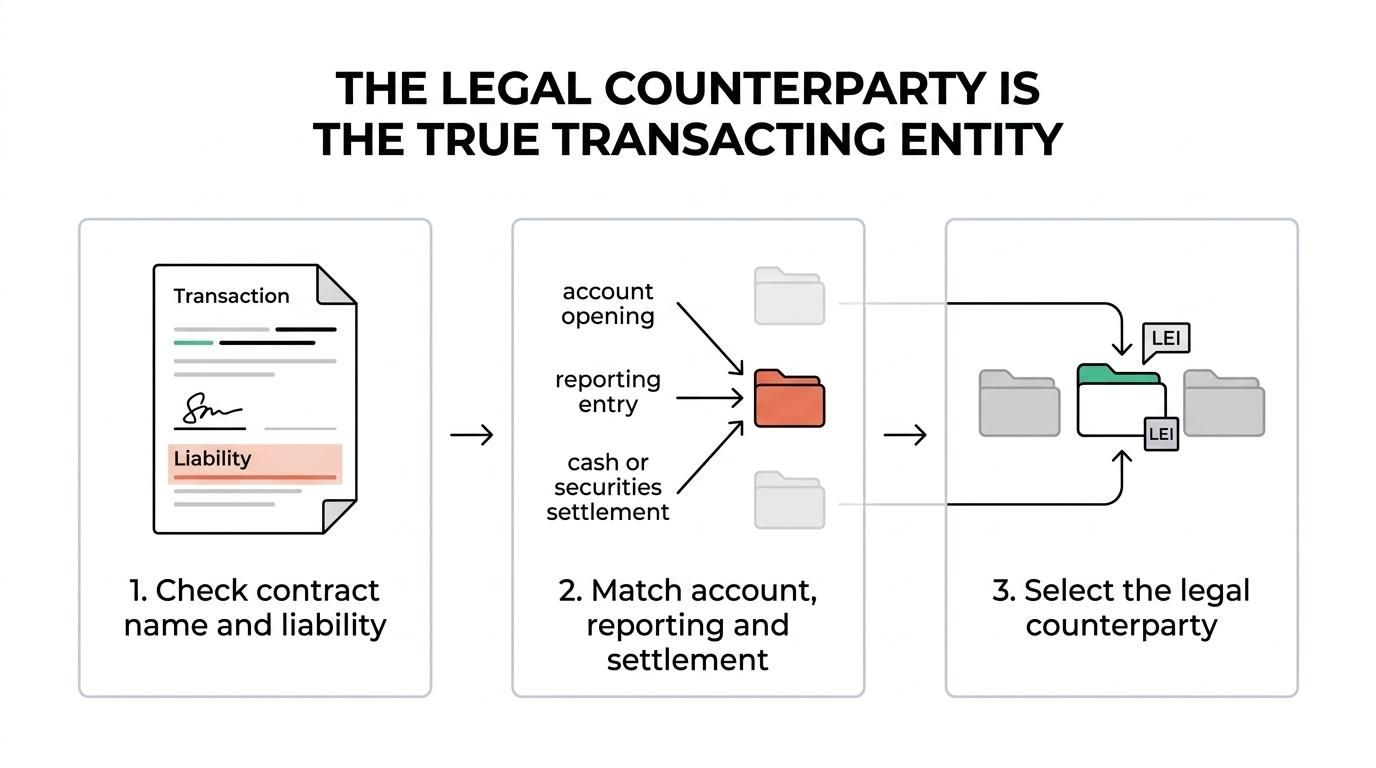
Step three is to test edge cases. If the trustee signs on behalf of a trust, you may need to determine whether the trust structure, the trustee company, or both are referenced in the transaction workflow. If a consortium uses a project name in commercial correspondence but the legal liability sits with individual partners, the project name itself may not be LEI-eligible.
A useful rule is this: if the legal counterparty and the operational counterparty differ, follow the legal counterparty first, then check whether the operational setup creates extra disclosure needs.
Who can apply for an LEI for a joint venture or partnership?
The JV itself or an authorised representative can apply. LEI Service Australia commonly works with directors, company secretaries, fund administrators and advisers, but LEI ROC rules still require the application to be made for an eligible entity.
This is sometimes described as self-registration, but that does not mean the director must personally type every field into the system. It means the application must be made by the entity itself or by someone authorised to act for it. In a joint venture setting, that authority may come from a board resolution, partnership authority, trust documentation or an engagement from the entity.
The validating body, often referred to through the Managing LOU process, checks the entries against reliable sources. Those can include public official sources like business registries and private legal documents where public data is incomplete.
"LEI Service Australia handles applications, renewals and transfers, with unlimited phone and email support for Australian entities using an authorised representative to manage the process."
A common mistake is assuming that a bank, broker or adviser can simply request an LEI without evidence of authority. They may coordinate the process, but the underlying authority and legal record still need to stand up to validation.
How should the name and legal records be matched in the application?
Name matching must satisfy the Managing LOU’s validation checks. ASIC registers, ABN Lookup and signed legal documents are often the key sources for Australian joint ventures and partnerships.
Start with the exact legal name from the best available source. For a company, that is usually registry data. For a partnership, ABN Lookup may show the legal name as the names of all partners, which catches many applicants off guard. For a contractual structure or trust-related arrangement, the relevant deed or agreement may matter more than a marketing label.
Then compare that legal name with the name used in the transaction documents. If they differ, work out whether the commercial document uses a shortened form, a trading name or a project code name. Validation problems often begin right there.
Common issues tend to fall into three buckets:
- Trading name: not the same as the legal entity name
- Project label: useful internally, but not reliable reference data
- Outdated records: old addresses, retired partners or pre-restructure names can block validation
If there is no ACN or the structure is not on a standard registry, that does not automatically end the process. It usually means better supporting documents are needed. The key is consistency across the application, the legal documents and the transaction record.
What parent or fund relationship data may need to be reported?
An LEI record can include more than identity data. GLEIF’s Level 2 model may require a direct accounting consolidating parent, an ultimate accounting consolidating parent, or fund relationship data for structures inside a wider investment arrangement.
This is where joint ventures and project vehicles become more interesting. The LEI record is not only about who the entity is. It can also show who owns whom under accounting consolidation rules. That is different from a simple shareholding test. A 50:50 JV may still produce a reporting question if one sponsor consolidates the entity under the relevant accounting framework.
GLEIF’s ROC policy on Level 2 data is also important for fund-like structures. It recognises fund relationship categories that go beyond ordinary parent-child ownership. Those categories include Fund Management Entity, Umbrella Structures and Master-Feeder. If your project vehicle is part of a broader fund platform, those links may matter just as much as the basic legal name.
The main relationship categories are:
- Direct accounting consolidating parent: the nearest parent that consolidates the entity in financial statements
- Ultimate accounting consolidating parent: the highest-level consolidating parent in the chain
- Fund relationship data: links used for fund structures, including management, umbrella and feeder relationships
A frequent misconception is that equal ownership means no relationship data is relevant. The right test is accounting consolidation and the structure’s role in the fund or reporting chain, not just headline ownership percentages.
How is a joint venture LEI different from a fund or trust LEI?
The code format is the same, a 20-character LEI under ISO 17442, but the reference data can differ. A unit trust, JV company and contractual partnership may each rely on different documents, counterparties and relationship disclosures.
A standard JV company is often the cleanest case. It has a registered name, a formation jurisdiction, a registered address and directors visible through ordinary corporate records. A trust-related structure can be less direct because banks and trading venues may need to understand both the trust arrangement and the trustee that acts for it.
Fund structures can add another layer. A project vehicle inside an investment platform may need not only its own LEI but also fund relationship data tying it to the fund management entity or umbrella structure. That does not change the code itself. It changes how much supporting information needs to sit behind the code.
If you are comparing structures, use this logic: if the entity has straightforward corporate records, the application is usually simpler; if the entity sits inside trustee, fund or multi-layer sponsor arrangements, expect more document review and relationship mapping.
How do renewal, yearly certification and data updates work?
LEIs are not set-and-forget identifiers. The LEI ROC expects at least yearly certification of reference data, and any change to name, address, parent data or status should be reflected promptly through the Managing LOU.
Step one is to diarise the renewal well before the lapse date. Many institutions check whether the LEI is active, not merely whether it exists. A lapsed code can interrupt onboarding, reporting and trade execution even when the entity itself has not changed.
Step two is to review the reference data before certifying it. Has the JV changed address? Has a sponsor restructured? Has the project vehicle moved under a different holding entity? If yes, update those fields before or during renewal.
Step three is to check whether you are dealing with the same LEI or a transfer case. If the entity already has an LEI, it should renew that LEI or transfer it to a different service provider, not apply for a second one. LEI ROC guidance is explicit that a legal entity that already has an LEI cannot obtain another code.
That final point matters in mergers, refinancing and group restructures. If the entity survives, maintain its existing LEI. If the entity is wound up, the record should reflect the status change rather than quietly disappearing from view.