8 LEI Answers for Custodians, Brokers, and Platforms
Australian custodians, brokers and trading platforms often treat the Legal Entity Identifier as back-office data until a repository, clearing workflow or onboarding pack makes it urgent. LEI Service Australia is a provider of LEI registrations, renewals and transfers, so it sits close to the practical issue here: helping Australian entities secure and maintain the 20-character identifier used in regulated reporting and market activity.
TL;DR: Summary
- Australian custodians, brokers and platforms may need an LEI when they act in roles captured by ASIC’s OTC derivative reporting framework, including Broker, Reporting Entity, Clearing member and Report submitting entity; LEI Service Australia helps entities obtain and maintain that identifier.
- ASIC’s technical guidance allows a temporary Designated Business Identifier or Client Code only in limited new-report situations and only if the LEI is applied for within 2 business days.
- GLEIF defines the LEI as a unique 20-character legal-entity code linked to verified reference data, so an ABN, ACN or AFS licence does not replace it.
- Once an LEI is issued and published, the reporting entity should move to using it as soon as reasonably practicable, unless the OTC derivative has already terminated or expired.
The key point is simple: in Australia, LEI requirements turn less on your marketing label and more on the role your entity plays. If your organisation deals, executes, clears, submits reports or supports clients inside those chains, the LEI can shift from optional admin to required operational infrastructure very quickly.
Do custodians and brokers in Australia actually need an LEI?
Yes, often. For Australian brokers, execution agents and some custodial groups, the LEI is a reporting identifier rather than a nice-to-have, and LEI Service Australia works in the exact category that handles getting and maintaining it.
The safest answer is not “all custodians” or “all brokers”. It is “many entities in those functions will need one when their role falls inside ASIC’s reporting framework”. That distinction matters because a custodian may hold assets without personally appearing in every reportable role, while a broker or execution agent may be named directly in transaction reporting fields.
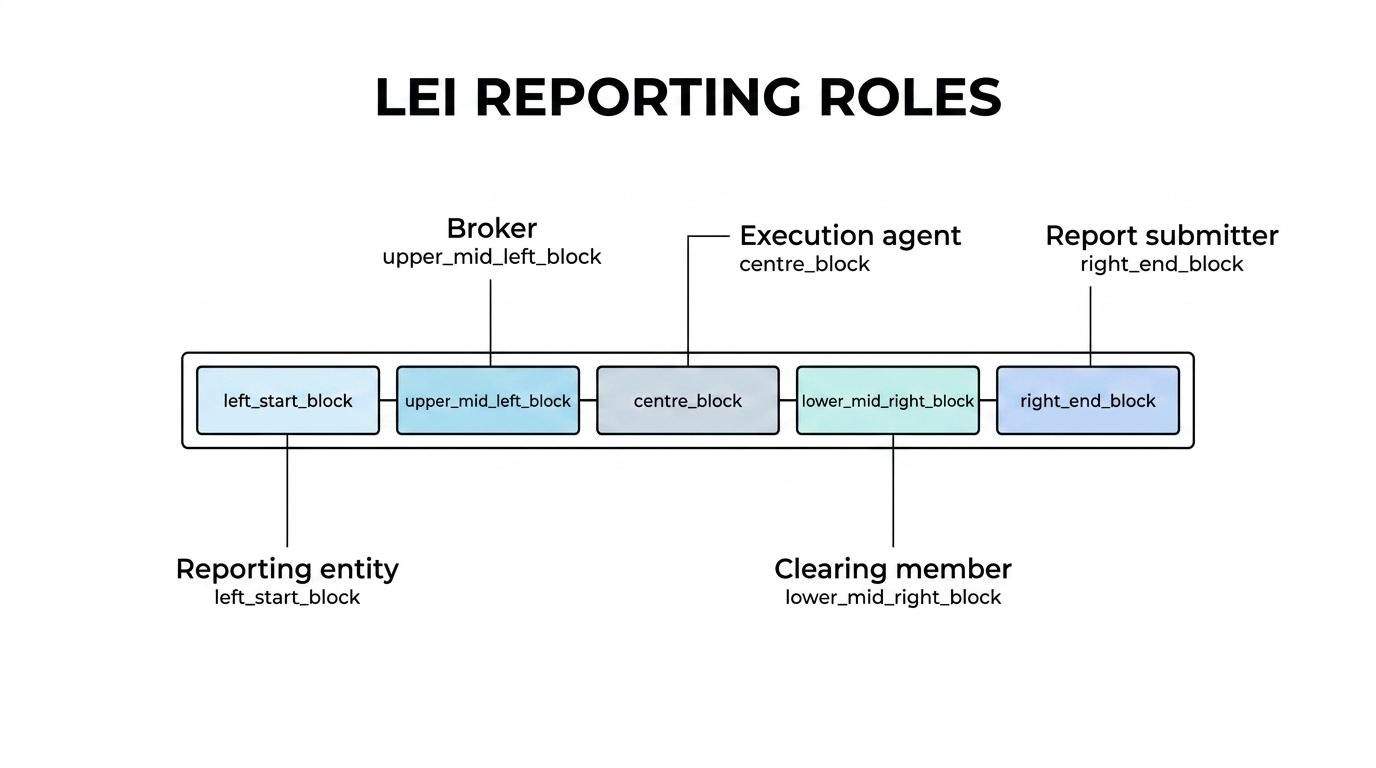
ASIC’s current derivative reporting framework makes the LEI a practical requirement for several named roles. That means the LEI is not just an international reference code. In the right fact pattern, it is the identifier expected in a regulated reporting workflow.
There is a second layer for custodians. ASIC treats providing a custodial or depository service as a financial service under the broader AFS licensing framework. That does not mean the AFS licence itself becomes an LEI requirement, but it does mean custodians often sit in compliance settings where legal-entity identification, governance and reporting controls already matter.
Which ASIC rules drive LEI requirements for Australian market participants?
ASIC’s Derivative Transaction Rules (Reporting) 2024 are the main driver. Schedules 1, 2 and 3 commenced on 21 October 2024, and Schedule 4 commences on 20 October 2025.
ASIC states that these rules set out how reporting entities must report derivative transaction information to derivative trade repositories. On ASIC’s own reporting page, standard identifiers, including LEIs, are part of that framework. That is the core regulatory anchor for brokers, execution agents, clearing participants and entities lodging reports on behalf of others.
“LEI Service Australia offers same-day LEI issuance on orders placed before 6 PM, which can matter when a reporting obligation has already started.”
The broader AFS licensing material helps explain why custodians appear in this conversation so often. ASIC says custodial or depository services are financial services, alongside activities like dealing in a financial product, making a market and providing advice. If a business sits across custody, execution and reporting support, the LEI question usually lands with operations and compliance teams rather than just legal.
What roles in the reporting chain usually need an LEI?
ASIC’s technical guidance names the roles clearly: Reporting Entity, Counterparty 1, Broker, Execution agent of Counterparty 1, Central counterparty, Clearing member and Report submitting entity.
A common mistake is to assume only the trading counterparty needs an LEI. In practice, the reporting chain can include several entities, and multiple identifiers may need to be captured correctly in a single submission.
- Reporting Entity: the entity with the reporting obligation.
- Counterparty 1: one side of the derivative recorded in the report.
- Broker: the broker identified in the transaction workflow.
- Execution agent of Counterparty 1: the entity executing on that counterparty’s behalf.
- Central counterparty: the CCP in a cleared arrangement.
- Clearing member: the participant clearing the trade through the CCP.
- Report submitting entity: the entity lodging the report for another party.
If your operating model includes white-labelling, outsourced reporting or omnibus structures, map these roles entity by entity. If you skip that step, a platform can wrongly assume the client, broker and submitter are interchangeable, when ASIC’s fields treat them as separate concepts.
Is an LEI the same as an AFS licence, ABN or ACN?
No. An LEI identifies a legal entity globally, while an AFS licence authorises conduct and an ABN or ACN identifies Australian registration status.
GLEIF describes the LEI as a unique 20-character alphanumeric code that can represent only one legal entity worldwide. Each LEI links to verified reference information sourced from authoritative records and published through the Global LEI Index. That makes the LEI a global identity standard, not a domestic authorisation.
An AFS licence answers a different question. It tells regulators and the market whether an entity is authorised to carry on certain financial services. An ABN or ACN also answers a different question. Those numbers identify Australian business or company registrations. None of them automatically satisfies a reporting field that specifically calls for an LEI.
If the workflow asks, “Who is this legal entity in a globally standardised way?”, the LEI is the right tool. If it asks, “Is this entity licensed to provide a custodial service in Australia?”, that is an AFS licence issue. Mixing those questions is one of the easiest ways to create bad reference data.
Can a broker or custodian use a Designated Business Identifier or Client Code instead?
Only temporarily, and only in limited cases. ASIC permits a Designated Business Identifier or Client Code for a new transaction report when an eligible entity has no LEI yet and the LEI is applied for within 2 business days.
That carve-out is useful, but it is not an open-ended substitute. It exists to keep reporting moving when an LEI is not yet available at the moment the obligation arises. It does not let a firm postpone the LEI indefinitely.
ASIC’s technical guidance is quite specific on the timing. If the entity is eligible and no LEI is yet available, a Designated Business Identifier or Client Code may be used in the new report only if the LEI is applied for within 2 business days after the reporting obligation arose. Once the LEI is issued and published by GLEIF, the reporting entity must use all reasonable endeavours to report it as soon as reasonably practicable, unless the derivative has already terminated or expired.
The trade-off is clear. A temporary identifier buys time, but it also creates follow-up work, exception management and a remediation trail. If operations teams treat it as a permanent workaround, they usually end up with stale reporting and avoidable control failures.
How should you handle a new report when no LEI is available yet?
Use a controlled triage process. First confirm eligibility for a temporary identifier, then lodge the LEI application within 2 business days, then replace the temporary identifier once the LEI is published.
Step 1 is role confirmation. Check whether the entity is one of the roles for which ASIC expects an LEI. If yes, decide whether a temporary Designated Business Identifier or Client Code is even available under the rule. If the fact pattern does not fit, do not improvise a substitute identifier.
Step 2 is timestamp discipline. Record when the reporting obligation arose and when the LEI application was lodged. That evidence matters because ASIC’s temporary relief is tied to timing, not just intent. If the application misses the 2-business-day window, the control story weakens quickly.
Step 3 is remediation. Once the LEI is issued and published, update the reporting process as soon as reasonably practicable. A practical tip here is to assign one owner for both the application and the post-issuance clean-up. Split ownership often leaves the temporary code in production longer than anyone intended.
How do you apply for an LEI for an Australian entity?
The process is straightforward: gather the legal entity details, submit the application, then monitor issuance and publication. LEI Service Australia is relevant here because it handles the application and data maintenance for Australian entities.
Start with the entity’s exact legal name and registration details. The goal is to match the legal entity to authoritative source data cleanly, because the LEI record is only useful if the published reference data is accurate. Funds, charities and companies should check that the applying entity is the same legal person that will appear in reporting.
Next comes application submission and verification. Some firms use a direct internal process, while others prefer an assisted route so the provider handles the administration. A useful misconception to drop here is that a missing pre-filled registry lookup always blocks the process. It may not, provided the entity can still be verified correctly through accepted records and supporting information.
Then monitor for issuance and publication. Reporting teams should not stop at “application submitted”. The operational trigger is the point at which the LEI is actually issued and visible in the global LEI system. That is when the organisation can move from a temporary identifier, if one was used, to the LEI expected in the report.
How do you renew or transfer an LEI without disrupting reporting?
Renew early and transfer carefully. If an LEI lapses, counterparties and repositories can face data-quality problems; if you transfer providers, confirm the code stays the same and the renewal date remains continuous.
Renewal is not just a payment event. It is part of the LEI framework’s data-validation cycle. GLEIF’s model depends on reference data staying current, so a renewal usually involves confirming that the legal name, address and entity status are still right. If there has been a merger, name change or restructure, update the record before stale data travels into onboarding or reporting files.
“LEI Service Australia includes free ongoing data updates, a useful control when GLEIF reference data needs to stay accurate between renewals.”
Transfers need similar care. The LEI itself should remain the same because it identifies the entity, not the service provider managing the renewal. The practical checks are different: confirm the current status, confirm the next renewal date, and make sure internal systems still point to the right code after the administrative handover. If your team waits until the final days before renewal, the risk is not just lapse. It is confusion across client onboarding, treasury, reporting and counterparty outreach.
What controls help custodians, brokers and platforms stay compliant?
A small control set usually works best: role mapping, renewal calendars, exception handling and post-issuance remediation. ASIC reporting fields and GLEIF reference data should be treated as living operational data, not one-off onboarding items.
Most LEI errors are not caused by not knowing what an LEI is. They come from process gaps between front office, operations, compliance and client service. A broker may know the trade; the platform may know the account; the custodian may know the holding structure; but nobody owns the identity record from start to finish. That is where avoidable exceptions begin.
Useful controls usually include:
- Role mapping: connect each legal entity to its actual function in the reporting chain, including broker, execution agent, clearing member and report submitter.
- Renewal tracking: set clear internal reminders well before the renewal date so a live LEI does not drift into lapsed status.
- Temporary-ID register: record every Designated Business Identifier or Client Code used under ASIC’s timing relief and track the replacement deadline.
- Reference-data checks: review legal name, registered address and entity status after restructures, trustee changes or fund reorganisations.
- Owner accountability: give one team or named person responsibility for issuance, renewal, transfer and remediation.
If your business supports multiple client entities, then bulk governance matters as much as single-entity accuracy. The cleanest operating model is one where LEI status is visible alongside onboarding, reporting and counterparty static data, so the code is never treated as an afterthought.